







On Saturday, Feb. 28, an attack was launched against Iran by the United States and Israel after a prolonged buildup and threats from President Donald Trump. The strikes were said to have targeted military assets in Iran and the top leadership of Iran.
This led to the death of Ayatollah Ali Khamenei, the supreme leader of Iran at the time. Following his death, the Assembly of Experts, a deliberative body in Iran that oversees the supreme leader, appointed Khamenei’s son Mojtaba Khamenei, as his successor.
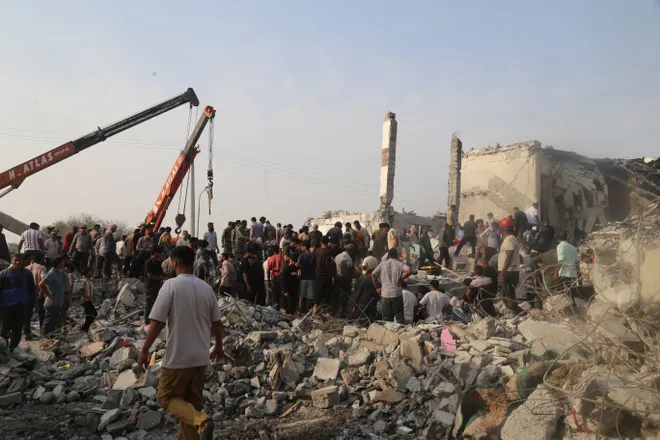
The Feb. 28 attacks took place in cities across Iran.
Iran retaliated with a barrage of drone and missile attacks directed toward Israeli military and government sites, as well as toward countries in the region hosting U.S. military bases.
According to Global Conflict Tracker, Iran’s ambassador to the United Nations has reported more than 1,500 civilians have been killed so far in the conflict and more than 3 million people displaced. Thirteen members of the U. S. military have been killed.
Israel and the U.S. have been at odds with Iran for decades. The countries’ history is complicated. Much of the conflict between the two sides is centered around the threat of nuclear weapons in Iran.
In addition to members of the U.S. military being killed and injured, the other main way Americans are being directly impacted by this conflict is through rising gas prices. According to the AAA Auto Club, the national average gas price rose to $4.12 per gallon on April 6. The national average was $3.32 one month prior on March 6.
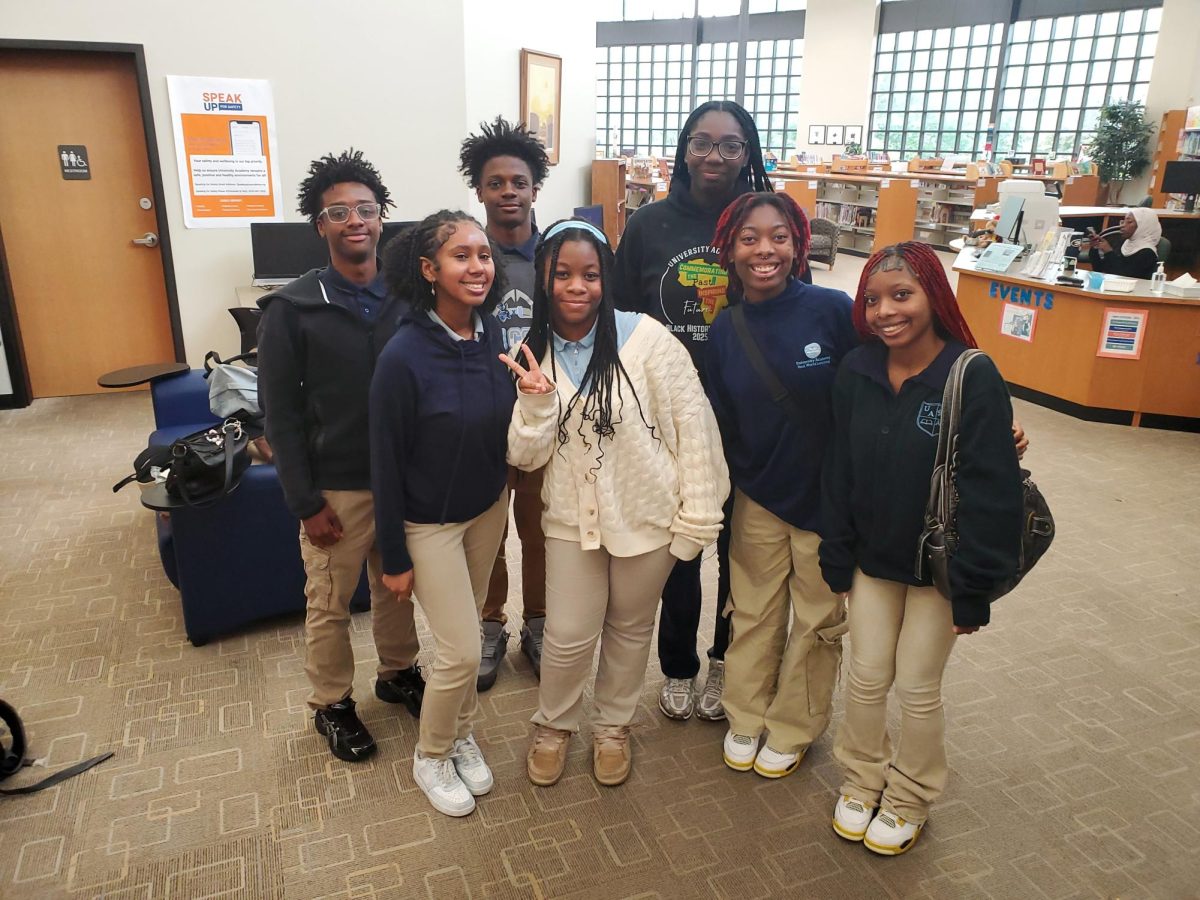
Not only has news of the war sparked words and protests from the people within the U.S., but it has also caused uneasiness for staff within University Academy.
“I am concerned about the objectives. I am concerned about the soldiers on the ground. I am concerned about our ‘purpose,’” said Mr. Michael Shabason, an Upper School history teacher at University Academy. “I am concerned that we assassinate or kidnap other leaders in other countries—is that a good precedent to establish? Are our ideas and principles not strong enough to promote change around the world?”
When big world events like this one are happening, students may wonder which sources to trust for accurate information, as people often question the reliability of social media platforms and some mainstream news sources.
“These days, in order to understand the events taking place both at home and abroad, you have to curate your own suite of reliable sources on the internet. This can be blogs, X.com follows, independent news sites or news aggregators,” said UA government teacher Mr. Dustin Havens.
With bias being a major concern, it’s recommended that readers search up a media chart that displays where sources stand.
Of course, reading and staying informed about the war is one thing; intimate involvement is an entirely different story.
“We are still seeing war in the abstract; none of our cities or civilians are being hurt or killed. So many changes occur when that is happening,” Mr. Shabason said. “If we experience war, like what is going on in Iran, Qatar or Israel, I think the reality changes. For them, the war is in their homes or neighborhoods. That is much different from what most Americans are experiencing right now,”
Hopefully some resolution will come soon and U.S. troops in and near Iran are brought back to their families safely.

